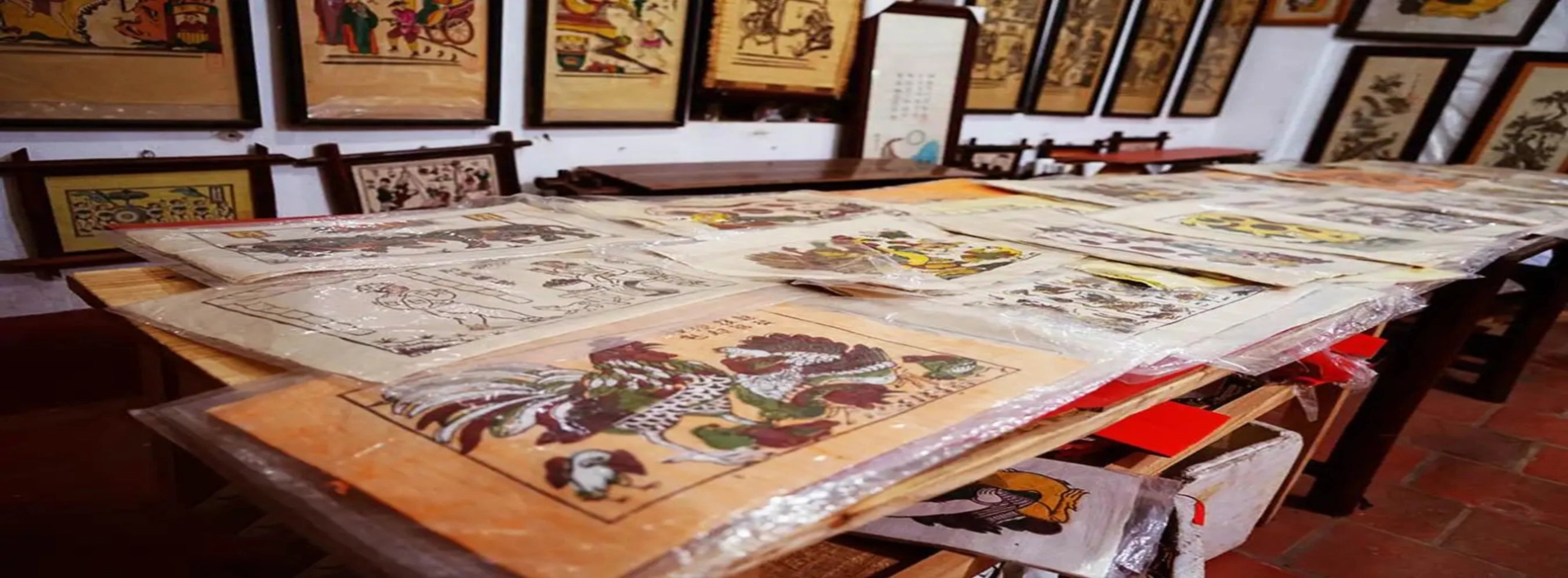
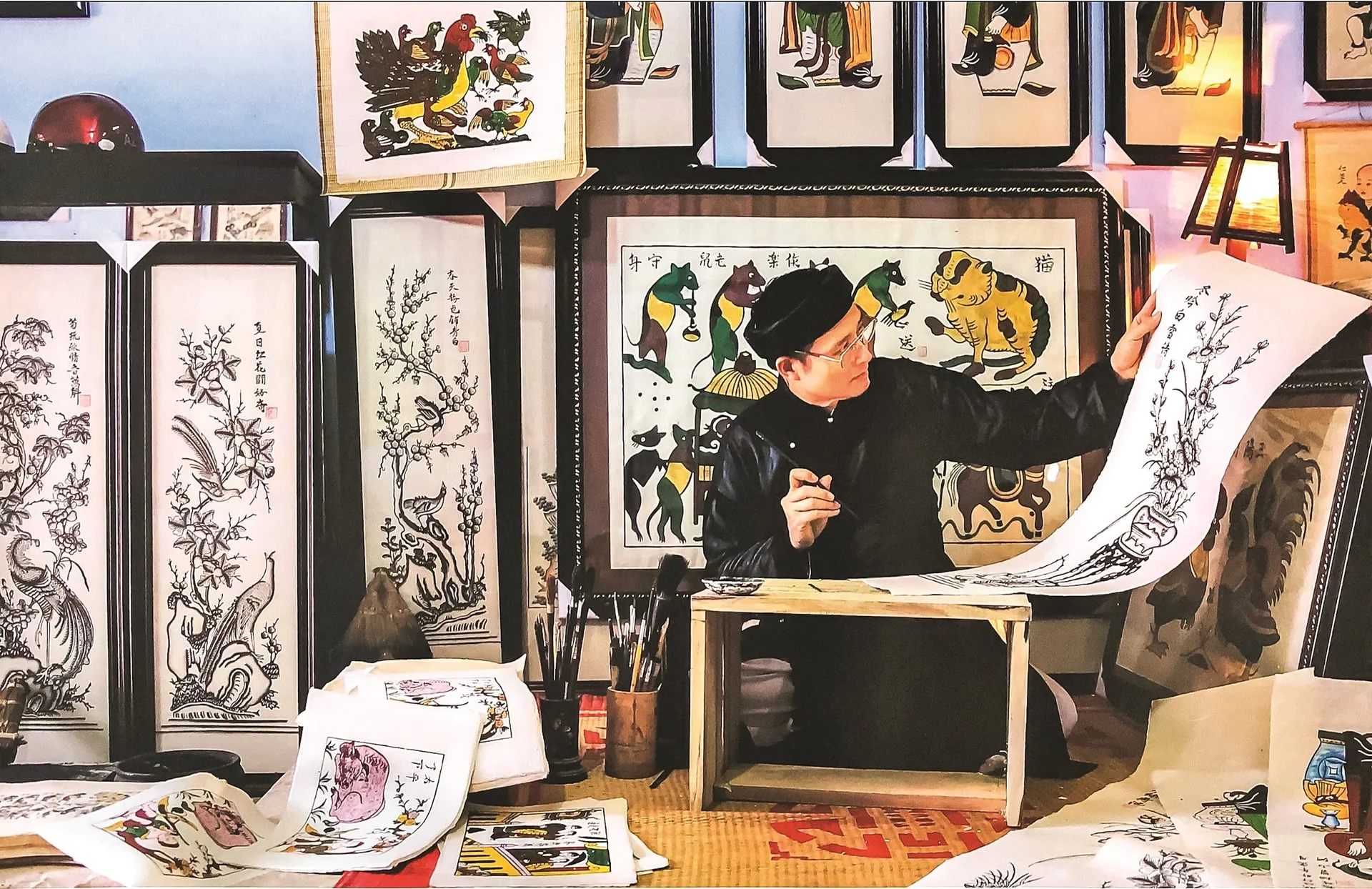
Dong Ho Painting Village is one of the most celebrated traditional craft villages in northern Vietnam. For centuries, local artisans have produced distinctive folk paintings using techniques passed down through generations. Traditionally associated with the Lunar New Year, these prints were displayed in Vietnamese homes to welcome good fortune, prosperity and happiness. Their simple compositions, vivid colours and symbolic imagery offer a window into the beliefs, humour and everyday experiences of rural Vietnamese society.
The village’s artistic tradition is distinguished by its hand-operated woodblock printing technique. Artisans first carve designs into wooden blocks, with separate blocks used for different colours. The images are then printed by hand onto giấy điệp, a special paper coated with powdered seashells that gives the surface a subtle, shimmering appearance. Traditional pigments are derived from natural materials, including plants, minerals and burnt bamboo leaves. The process requires considerable skill, particularly in aligning each colour layer to create a balanced and harmonious image. In 2025, the craft was inscribed on UNESCO’s List of Intangible Cultural Heritage in Need of Urgent Safeguarding, highlighting the importance of preserving this vulnerable tradition.
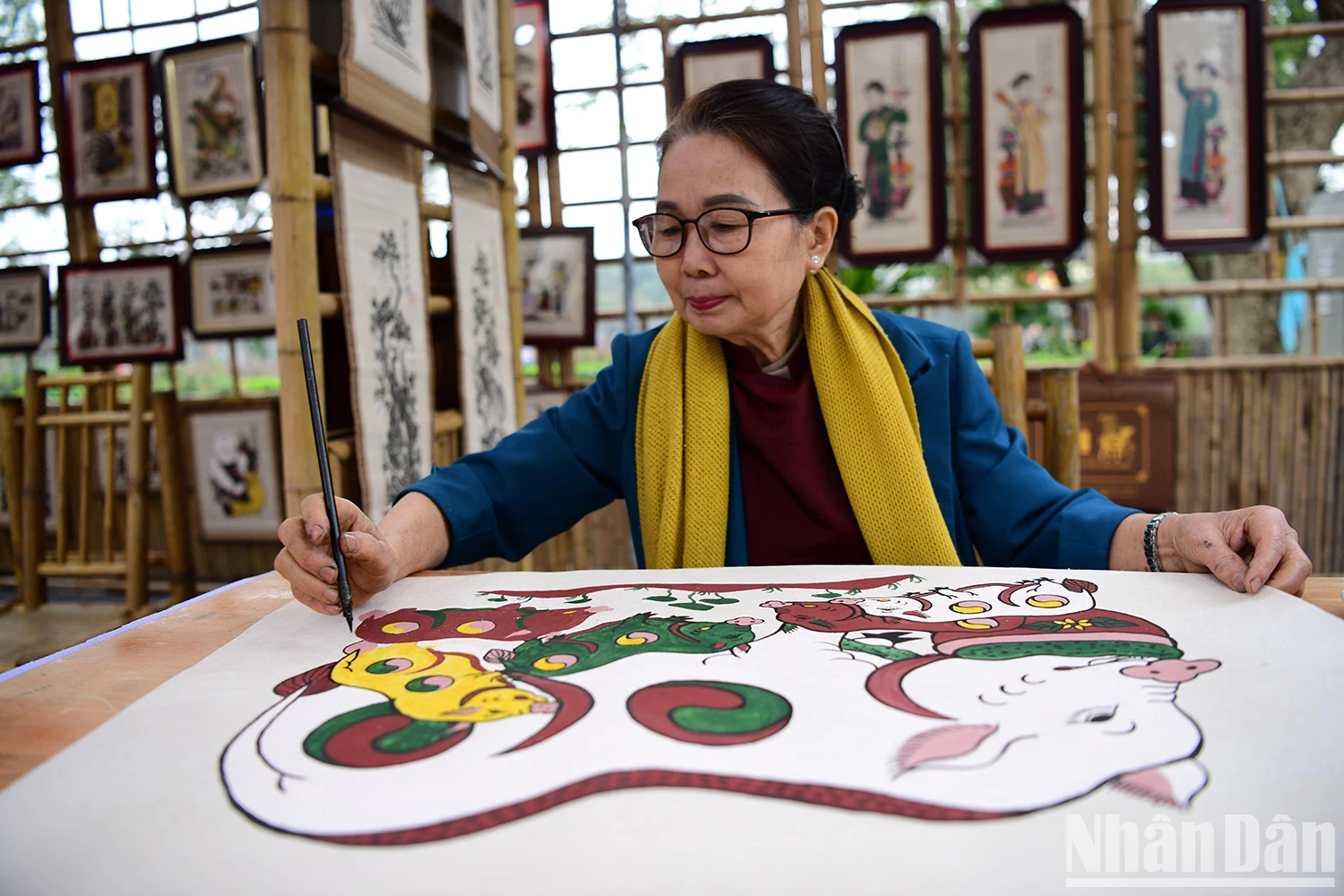
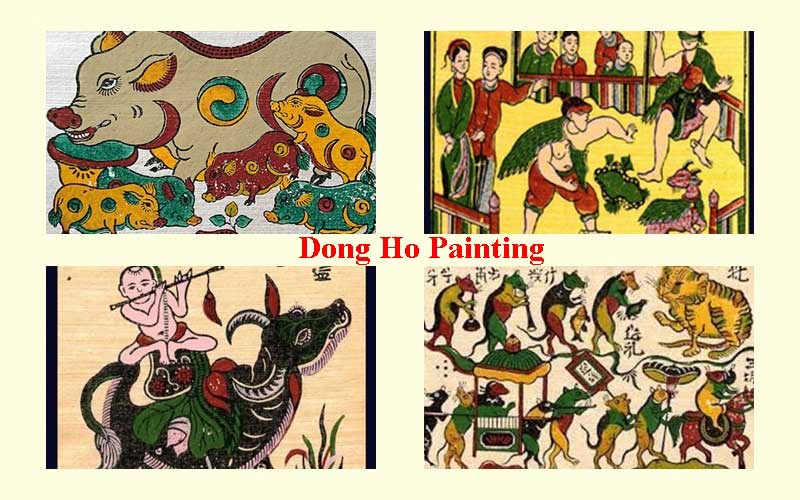
Dong Ho paintings are especially recognisable for their bold outlines, uncomplicated forms and meaningful subjects. Famous examples include The Rat’s Wedding, a humorous and satirical scene, and paintings of pigs with circular patterns symbolising abundance and prosperity. Other works depict farming, family life, festivals, historical stories and spiritual beliefs. Rather than pursuing realistic perspective, the artists use expressive shapes and symbolic details to communicate ideas that are easily understood across generations.
A visit to the village offers more than an opportunity to view finished artwork. At participating artisan homes and workshops, visitors may observe the preparation of printing materials, examine traditional woodblocks and watch the printing process firsthand. Some workshops also offer hands-on activities, allowing visitors to apply pigments to carved blocks and create their own prints. Availability depends on the individual artisan and should be confirmed in advance.
The village is also an important place to understand the challenges facing traditional Vietnamese crafts. As demand for handmade paintings has changed, the number of families continuing the original techniques has declined. Dedicated artisans and their families remain central to preserving the craft, maintaining old woodblocks, teaching younger generations and introducing traditional prints to contemporary audiences. Buying artwork directly from practising artisans, where available, can help support these preservation efforts.
For travellers interested in Vietnamese art, heritage and local craftsmanship, Dong Ho Painting Village provides a rewarding cultural experience. It can be combined with visits to other traditional villages and historical sites in Bac Ninh City, offering a broader introduction to the artistic traditions of the Kinh Bac region. For the most engaging visit, arrange a workshop in advance and allow time to learn about the stories and symbolism behind the paintings rather than simply browsing the finished works.